Tag Archives: feature1

What’s going on this week?

Tuesday
Grandma’s Boyfriend, Pink Films, The Broonies |
Hemlock Tavern, 9pm

Wednesday
The Raincoats, Grass Widow |
Great American Music Hall, 9pm
The Tambo Rays, Cool Ghouls, Poor Sons |
Brick and Mortar Music Hall, 9pm

Thursday
Gavilan, Knifes, The Niners |
Sub-Mission, 9pm

Friday
Pow!, Spencey Dude and the Doodles, Violent Change |
The Stork Club, 9pm
Ed Schrader’s Music Beat, PreTeen, Re-Volts | Thee Parkside, 9pm

Saturday
Terry Malts, Kids on a Crime Spree, Manatee |
1-2-3-4 Go! Records, 7pm

Sunday
Jello Biafra and the Guantanamo School of Medicine, Black Cobra, Pins of Light |
Thee Parkside, 9pm

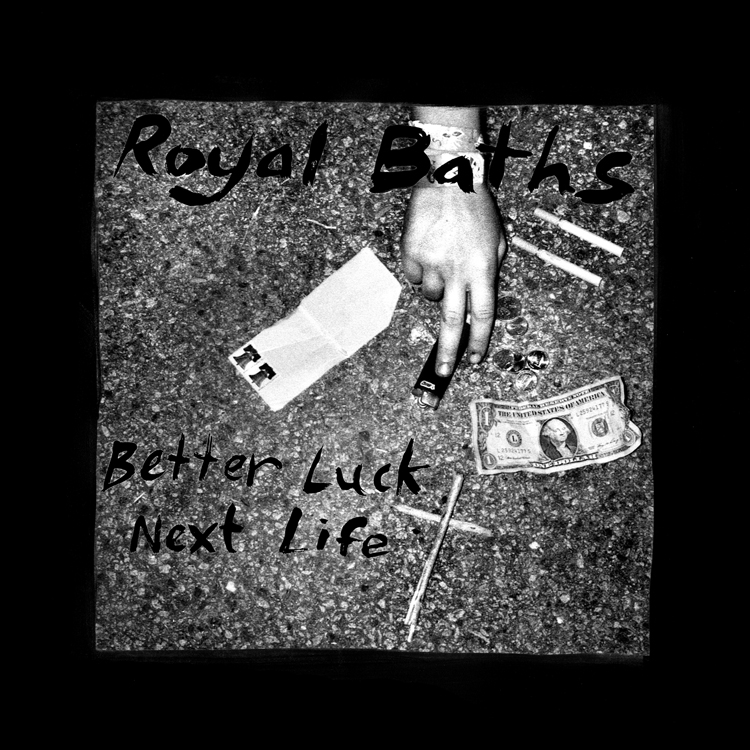
album pick: Royal Baths - Better Luck Next Life

by Sky Madden

With a stinging vengeance comes Better Luck Next Life from the Kanine imprint (great releases this past year from Young Prisms, Surfer Blood and Dream Diary). On their sophomore effort the Royal Bath boys Jigmae Baer and Jeremy Cox evince more of their gloomy catharsis. Always dependable for not being blissed out, but rather strung out, blacked out and freaked out, the new cuts here delve further into the rabbit hole. On BLNL they do what it is they know best by taking refuge in the bonfire and finding safety in harms way. And in taking comfort with discomfort, the Baths come on strong, straight out the gates with opener and first single off the album “Darling Divine.” Wrapped in bent notes and vocal snarls, “Darling Divine” is Next Life’s prologue, a kiss off for what’s to come of the Royal Baths newest chapters on damaged love and depravity.

The Royal Baths mythology comes to life on Better Luck Next Life with the vocal play between the two, which is eerie as the they often mimic each others’ intonation and timbre. The constantly hard rolling rhythm section makes a cold bed for Baer and Cox’s prophetical vocals, sometimes softly spoken or dismissively rattled off with sinister confidence. On songs “Faster, Harder,” “Nightmare Voodoo” and “Map of Heaven” their kaleidoscope reflects dystopic scenes, casting images of high heels walking in the opposite direction, bedroom abuse and blackened intimacy, that complicate the idea of pleasure. The lyrical bravado and restless instrumentation on “Be Afraid of Me” calls to mind the experience of involuntary twitching while falling asleep or just starting to regain consciousness. This is to say that for all the destabilization of guitar and vocal battles on BLNL there are areas of meditation, moments of transportation. The angular pierce of Cox’s bizarre scale crawls are back too. He’ll solo in and out of verses, playing at speeds conjuring a freak vibrato that races against Baer’s howling, effecting the sound frequency of bow to violin. There is a sweaty, closed fist, “Fuck yes,” instance of this on side A track “Burned” where the two drown each other out in sound.

The recording is the band’s cleanest, warmest yet featuring a new a version of “Black Sheep.” Better Luck Next Life is a grinning nightmare for fans of shamble pop or anyone who’s survived a two-faced girlfriend. If Better Luck Next Life is on in a room near by and you’re sitting down you’ll stand up. If you’re in a coma, you will be shaken out of it.

“Do you think I don’t know what’s wrong? It is me.”

mp3:
Royal Baths // “Darling Divine”

Ty Segall + White Fence LP collab announced

[photo by Ruth Swanson]

Stoked to hear more about this since Ty Segall dropped some hints a few months ago - thanks to Spin, we now know that the duo’s collaborative effort, entitled Hair, features Tim Presley on lead guitar/bass and Ty on drums/guitar. The album drops sometime in April on Drag City and will be supported with a tour that starts in SF Friday March 3rd at Great American Music Hall. Buy tix for that here. Ty also talks up his new solo album, due out in September, as “sounding really fast and hard and aggressive,” so make sure to check out the full interview.

Positive Destruction albums of 2011

The Bay Area absolutely smashed it in 2011, with some of our favorite artists releasing amazing albums, EPs and cassettes that we’ve been listening to endlessly this year. It was incredibly difficult to cull the past 12 months to our favorite 15 releases, but we did it anyway. Check them out below and let us know what you think in the comments.

15 The Sandwitches // Mrs. Jones’ Cookie

mp3:
The Sandwitches //
“Lightfoot”


The Sandwitches // “Joe Says”


14 Bare Wires // Cheap Perfume

mp3:
Bare Wires // “Cheap Perfume”


Bare Wires // “Ready to Go”


13 King Lollipop // Woodland Whoopee Songs

mp3:
King Lollipop // “Cheeseburger and Fries”


King Lollipop // “You Will Never Find Me”

12 Pamela // Pamela is Hungover

mp3:
Pamela // “Lie Down (Eye Contact)”


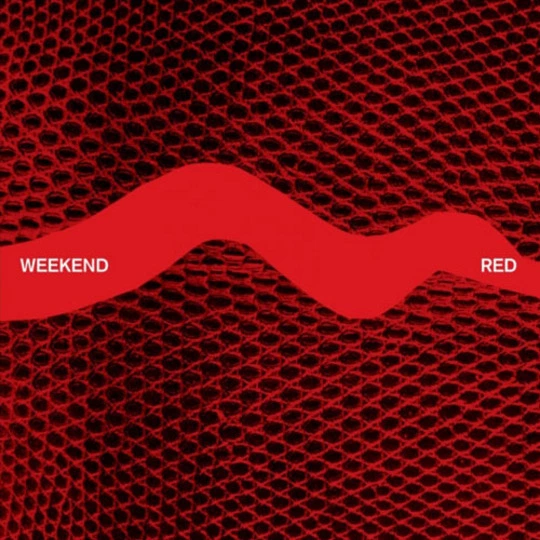
11 Weekend // Red

mp3:
Weekend // “Hazel”


Weekend // “Sweet Sixteen”

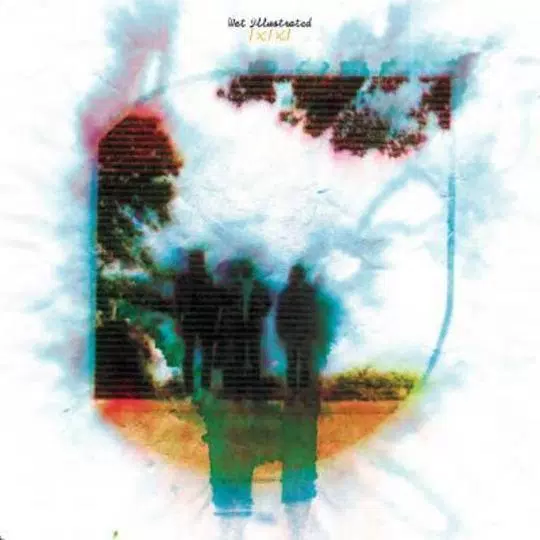
10 Wet Illustrated // Wet Illustrated

mp3:
Wet Illustrated // “Gypsy Town”


Wet Illustrated // “Claws”


09 Ty Segall // Goodbye Bread

mp3:
Ty Segall // “Goodbye Bread”


Ty Segall // “You Make the Sun Fry”

08 Swiftumz // Swiftumz

Hunx collaborator Christopher McVicker managed to release one of the most understated albums of the year under the moniker Swiftumz. “Don’t Trip” is an immersive collection of hazy, moving jams that transcends the limits of bedroom pop.

mp3:
Swiftumz // “4EVA”


Swiftumz // “Angelita”

07 Rank Xerox // Rank Xerox


Rank/Xerox // “Sterile Regions”


Rank/Xerox // “Nausea”

06 Blasted Canyons // Blasted Canyons

Never before has an ode to weed and ice cream sounded so raw, explosive and all-together effortless.

mp3:
Blasted Canyons // “Ice Cream Man”


Blasted Canyons // “Death and a Half”

05 White Fence // Is Growing Faith


mp3:
White Fence // “And By Always”


White Fence // “Lillian (Wont You Play Drums?)”

04 Ty Segall // Singles 2007-2010

mp3:
Ty Segall // “Bullet Proof Nothing”


Ty Segall // “The Drag”

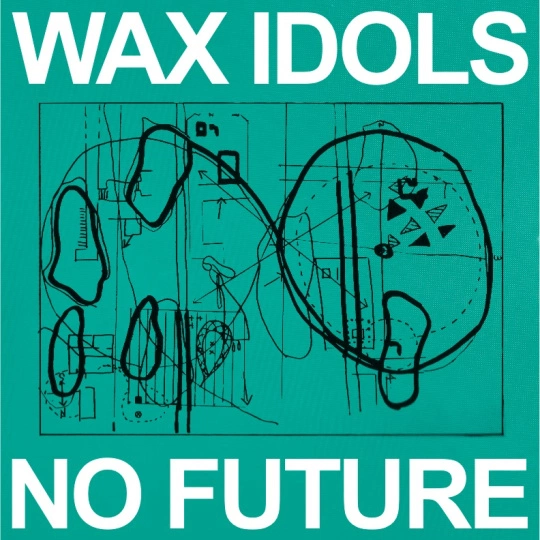
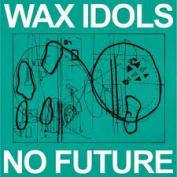
03 Wax Idols // No Future

The debut LP by Wax Idols features singer/songwriter Hether Fortune elevating the charming pop sensibilities found on her earlier work to a complete full-length, with lyrics veering from the lovesick to the macabre.

mp3:
Wax Idols // “Gold Sneakers”


Wax Idols // “Dead Like You”


02 Mikal Cronin // Mikal Cronin

This scuzzed-out compilation of pop songs marked a solid debut album from Moonhearts/Ty Segall collaborator Mikal Cronin. Unexpectedly wistful and incredibly catchy, this is a record we’ve been spinning endlessly.

mp3:
Mikal Cronin // “Get Along”


Mikal Cronin // “Apathy”

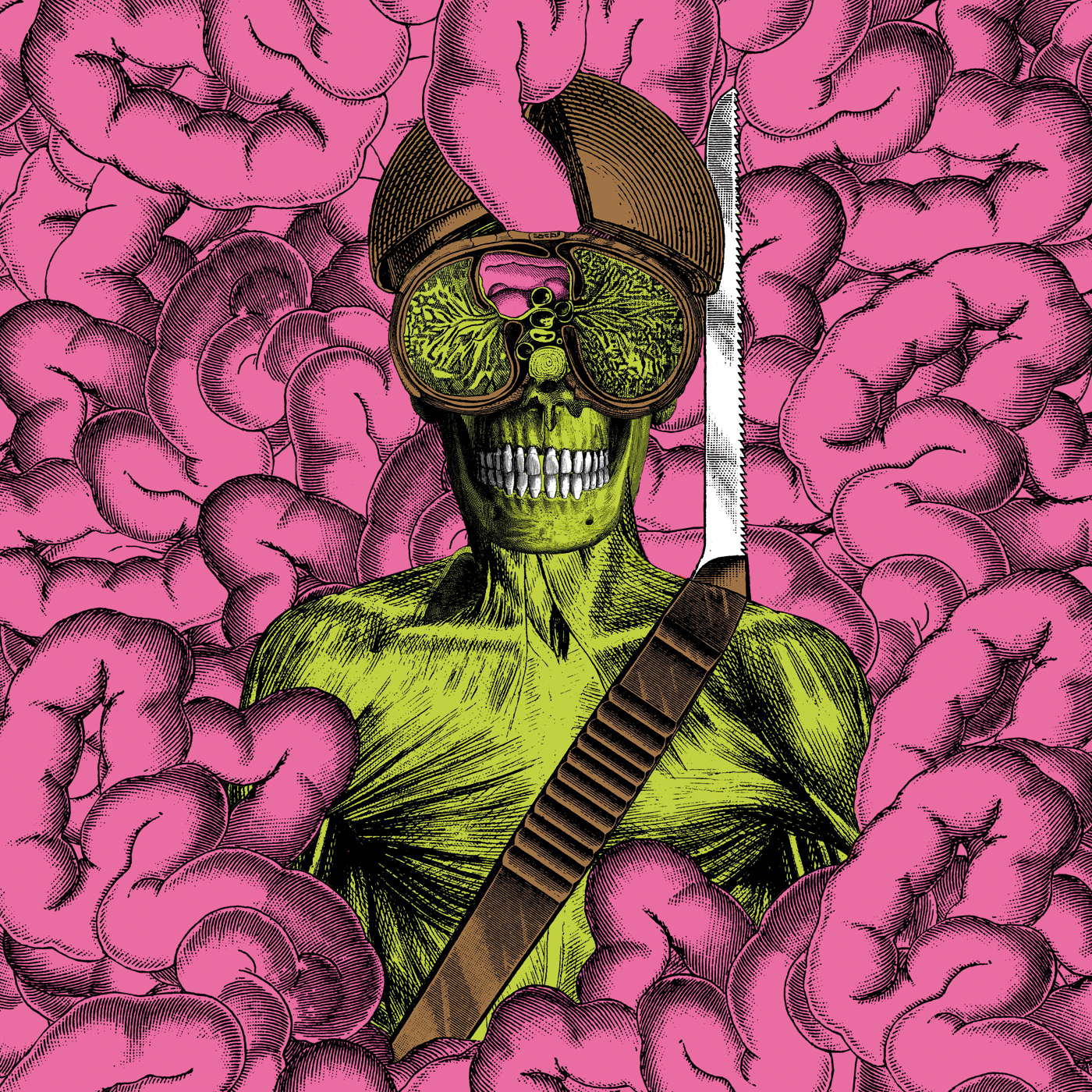
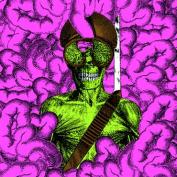
01 Thee Oh Sees // Carrion Crawler/The Dream

Thee Oh Sees scorched through 2011, releasing two mind-blowing full-length albums and a singles only double-LP all while maintaining a frenetic touring schedule that recently concluded (with Total Control). Carrion Crawler/The Dream was announced only a few weeks after Castlemania, and proved to be the “pummeling” record John Dwyer promised it to be. An instant classic and our unequivocal favorite record of 2011.

mp3:
Thee Oh Sees // “The Dream”

Thee Oh Sees // “Carrion Crawler”


cool 2k11

NME recently put together a “cool list” of music makers and shakers for 2011; GorillavsBear did a good job ripping it apart in their list and perhaps pointed out the obvious in stating that making “‘cool lists’ is not really that cool.” Nevertheless, here’s our Bay Area version. Let us know what you hate in the comments.

10 Shiv Mehra // Creepers


mp3:
Creepers // “Spiral”

09 Corey Cunningham // Terry Malts


mp3:
Terry Malts // “Tumble Down”


08 Lars Finberg // Thee Oh Sees


mp3:
Thee Oh Sees // “The Dream”

07 Mikal Cronin


mp3:
Mikal Cronin // “Get Along”

06 Mark Tester // BURNT ONES


mp3:
Burnt Ones // “Do the Spell (Loud)”

05 Robbie Simon // Wet Illustrated


mp3:
Wet Illustrated // “Gypsy Town”


04 Tim Presley // White Fence


03 Blasted Canyons


02 Chris McVicker // Swiftumz


mp3:
Swiftumz // “Angelita”

01 Mike Donovan // Sic Alps


mp3:
Sic Alps // “Breadhead”

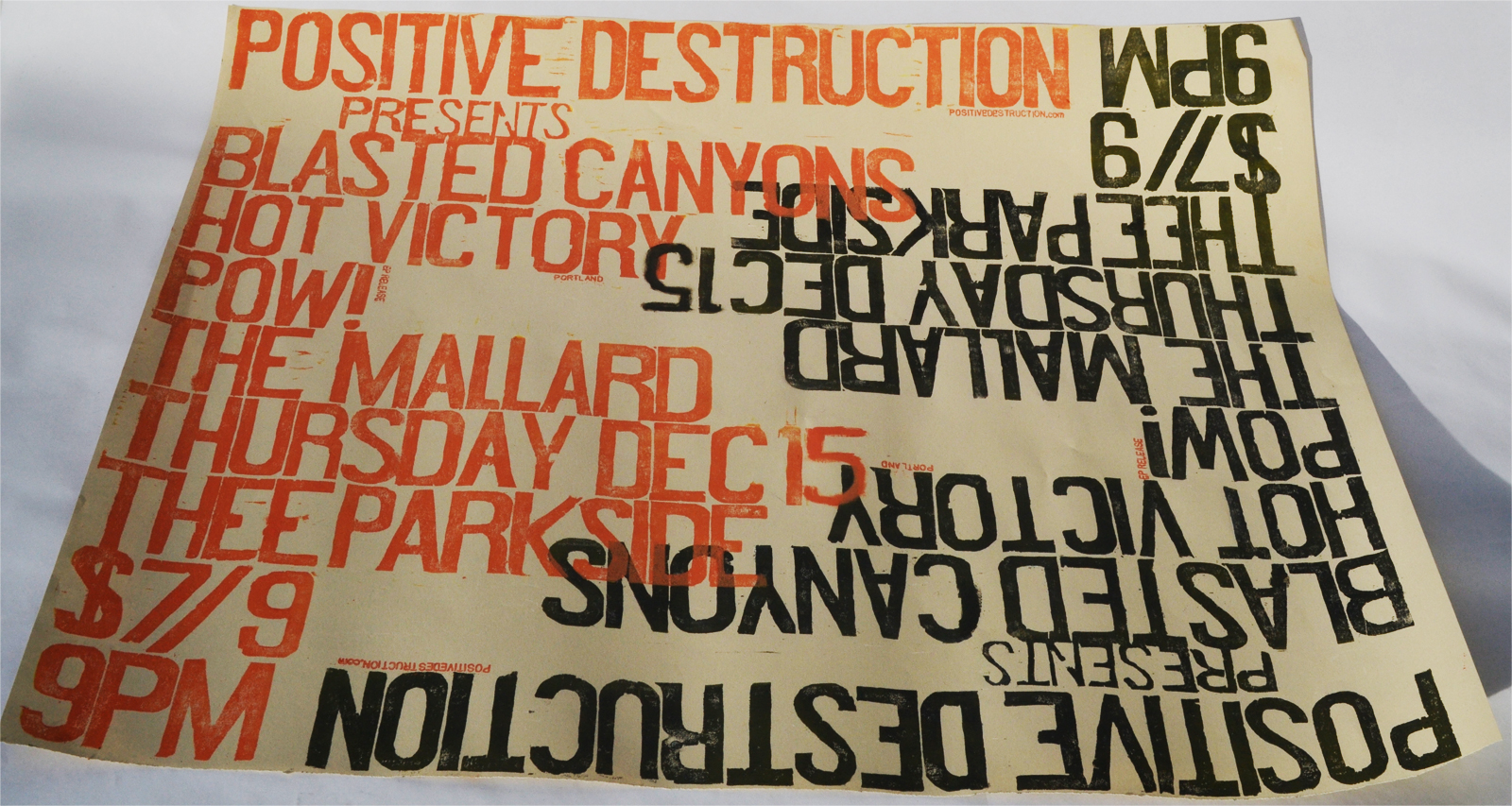
Positive Destruction presents: Blasted Canyons, Hot Victory, POW!, The Mallard

Beyond psyched to announce that we are once again teaming up with Thee Parkside to host our second Positive Destruction Presents showcase on the evening of Thursday, December 15th. Following up on the success of our inaugural event, the lineup features the creator of the best album of 2011 to date (Blasted Canyons), electro-dystopians Hot Victory (from Portland), POW! (it’s their EP release party) and the most recent signing to the Castleface label, The Mallard. (Incredibly sick woodcut above also by Greer McGettrick)

Tickets are on sale now. The show kicks off promptly at 9pm, and we encourage everyone to come earlier to catch all four bands. RSVP on the Facebook event page.

mp3:
Blasted Canyons // “Ice Cream Man”

Hot Victory // “ZENITH”

POW! // “Night Train To Fog Town”

The Mallard // “Fault”

interview: Moon Duo

Ed: More photos over Moon Duo’s performance at Moogfest over on our Facebook page.

Positive Destruction caught up with Moon Duo over Halloween weekend at Moogfest in downtown Asheville, North Carolina after their pulsing midnight set on Saturday. Ripping through songs off of Mazes as well as the excellent Escape, they brought the horror and the noise. The band has recently relocated to Colorado where they continue to assert their spooky physc informed idea of dance while maximizing the efficiency, ability and creativity of two brains and two sets of hands. Below contributor Charlotte Simons discusses composition, gear and the long road with keyboardist Sanae Yamada and guitarist Ripley Johnson.

Charlotte Simons: So you guys are stationed in Colorado and no longer San Francisco. How did that come about?

Ripley Johnson: We couldn’t afford to live in San Francisco any more. It’s kind of sad but we decided to do Moon Duo full time and we wanted to go on tour and just go for it so we had to move to make that work. Sanae quit her job and I had been laid off already. The place we live now is called Blue River. It’s in the mountains near Breckenridge.

Charlotte: What were your San Francisco day jobs?

Ripley: I was a systems administrator for an Internet company.

Sanae Yamada: I taught middle school English.

Charlotte: Oh wow. I’m always interested in how bands travel and make rent and in what they do when they’re not practicing or playing shows.

Ripley: I’m always interested as well, like how do people make it work? We don’t really talk to other bands about this but it is always a big problem because someone will be like, “Oh come play this festival in Scandinavia! We’ll pay you $500!” Are we’re like, we can’t do that, there’s no way even if it covers the cost of getting there and back it doesn’t pay your rent. So yeah, how do you keep a job and how do you keep an apartment and tour? It’s interesting how people make it work.

Charlotte: Was it always this way? Do you think it was this difficult 30 years ago to do art and live?

Ripley: I don’t know. I mean I think so. I mean because for example if you’re a painter, you work a shit job, you’re not going anywhere and there’s no travel expenses and you’re not gone so you can work some day job and come home and paint all night. You’re not touring with your paintings so there’s not that extra burden for most other kinds of artists.

Sanae: I think actually for musicians it’s a special problem in the United States because in Europe it’s a lot easier to get funding or federal funding for playing music or for putting on a festival or doing something that’s not necessarily classical music, opera or ballet which is what seems to get the bulk of federal funding in the States. Also in a lot of European countries, the state covers your health care and any education that you or family might want. So all these pressing concerns in the Sates create a unique situation for people who want to make art full time.

Charlotte: How has Moogfest been for you guys?

Sanae: Really great, really fun.

Ripley: Yeah we’ve been chilling out a little bit, we haven’t seen that much music.

Sanae: We wen’t to the movies yesterday.

Charlotte: Oh yeah, what did you see?

Ripley: Contagion

Charlotte: I was in that scene downtown where people are fighting for a vaccine in the convenient store off of Clay Street. You know the scene? Like people are dog piling and Jude Law is prevailing? They never paid me. I stood around doing that for like 9 hours.

Ripley: Ohhhhhhh yeah. Yeah that scene. Can you see yourself in it?

Charlotte: I don’t know I never saw it. Another day job… this one was unpaid though.

Ripley: Yeah well we never get to go to the movie theatre because we travel so we took a chance, or we took the opportunity rather, to see something.

Sanae: Whenever we have the day off we always sort of see if going to the movies is a possibility.

Charlotte: Why movie theaters?

Ripely: We just love film. And also in Colorado there’s a theatre half an hour from our place and that’s it and they just play four or five movies at a time and it’s what’s ever the big movies are so any chance we get to see something that’s not Disney or something we try to take the opportunity.

Charlotte: So your set was at the same time as Suicide’s set this evening but you still got a really great urn out. At the end of your set I talked to those guys who were right up front watching you and I asked them why they were interested in your music. They were from here (Asheville, North Carolina) and they said that they felt really comfortable and safe doing acid listening to Moon Duo. I feel like there’s this gentle drug sound you have. It’s not so direct and it’s not overtly psychedelic or overwhelming or over the top. So what he said could make sense for a lot of people in terms of how they experience Moon Duo. How do you feel about that comment?

Ripely: I mean I think it’s great, I mean I’m glad people feel safe you know like that they’re not playing music that’s going to freak them out. We don’t really think about it too much you know but you always want someone to like your music, you play a show and you know it’d be great if everyone came and liked your music but when you’re making the music initially and you’re creating the song and the ideas for your music you don’t think about that kind of stuff. It isn’t until after that you think, “I hope someone likes this.” While you’re doing it you’re not thinking, “Oh well what about someone in Asheville that’s going to be on acid, will they be able to deal with this?” It’s never part of your thought process so anything that someone says is interesting, it’s always good if it’s positive but it’s always fascinating to hear what people say after a show.

Sanae: You make the music and the primary concern is, “Does this sound right to us? Do we like it, is this what we want to do?” But then with any other art form you put it out into the world and then what comes back at you is always kind of fascinating because like Ripley was saying, it’s stuff that you never would have thought to consider. But I think that’s one of the great things about music. A piece of music can mean so many things to different people or it can work or not work for different people for an infinite number of reasons. The interpretive aspect is I think one of the most interesting things about it, about the experience.

Charlotte: You said that it could work or not work. Sometimes when it’s not working it’s working. Right?

Sanae: Yeah definitely. Any reaction is a positive thing I think. If someone feels something whether it’s revulsion or ecstasy it’s worth something.

Charlotte: Despite talking about music tonight as something that is intuitive and something that is so much so a part of what is considered to be spontaneous I want to breach that a little bit and talk about the composition and the structure of Moon Duo songs. I feel that if I had to describe the bulk of what you guys do I would say that there are these prolonged, consistent drum sequences and then an explosive guitar solo that comes about and is kind of supported by these loud organ sounds. Then you listen to {Mazes} or {Killing Time} all the way through and learn that that’s not necessarily always so. I feel that you push length in terms of song duration and I think that you’re doing something different.

Ripley: I mean for us it’s easy, we could go for 20 minutes. It’s not that hard for us to go long. I think though that a good way to think about it is how rock ‘n’ roll… well we consider ourselves a rock ‘n’ roll band and from a rock ‘n’ roll perspective the whole idea of dance music is sort of lost on rock ‘n’ roll. It’s not considered a dance form anymore or a dance genre. In fact dance music is a genre right? Although there are all these subgenres of dance, rock ‘n’ roll is not one of them. Rock ‘n’ roll is a separate thing and where as rock ‘n’ roll started out as a dance music, we are interested in rock ‘n’ roll as a dance music. It’s interesting because in every interview, nearly every interview, people will talk about the repetition of the drums or the length of the songs or how they go on and on and on and how it doesn’t change. But that’s something that’s so common, especially at Moogfest and it’s great that we’re here and in seeing bands tonight all of them are like, “Boom chhh- Boom chhh- Boom chhh-,” it’s the same beat over and over again and a lot of the songs are really long but no one would ever ask a techno artist, “Why is the beat the same for ten minutes,” or “You play these long songs that are very repetitive, what is up with that?” That’s because that’s accepted in that genre but in our genre, rock ‘n’ roll, people don’t expect that. It’s considered unusual which is pretty fascinating because in the ’50′s at dances and stuff people would play repetitive groves and longer songs. Maybe not longer but an important part of the music was the rhythmic aspect. This is something we think about and are interested in and that’s why we do that.

Sanae: I think because early rock ‘n’ roll was so focused on dancing that dancing was an integral part of the emergence of rock ‘n’ roll so the establishment of a primal, repetitive grove was really an essential thing. The essential question in early rock was, can you dance to it? And I think that repetitive beat is obviously really great for dancing and that’s what sets it in motion.

Charlotte: Since we’re at Moogfest I feel like it’s okay if we nerd out on some of the equipment you guys are using.

Ripely: I’m running my guitar through an MXR Distortion Plus, it’s like an early ’80′s late ’70′s distortion pedal. There’s an MXR Phase 100, a Geoffrey Tease Real McCoy wah pedal and this Big Muff, I forget what it’s called.

Charlotte: It’s huge!

Ripely: Yeah it’s like a double Big Muff, it’s like two, it’s really strange, it’s like one side is regular Big Muff and the other side is over drive so it’s like a double pedal. Then there’s a looper pedal which is a Boss something or other. There’s also a Memory Man.

Charlotte: In terms of what you start and end your chain with is there an effects loop that you set up, does it matter which pedal you place in front of the other?

Ripely: Yeah but it’s not an effect loop in the sense that there’s a dry signal as well, the guitar is just run through all of them. But the order matters, people suggest different things but it’s sort of trial and error. And that’s one of the problems with this Big Muff, this Big Muff is an amazing pedal because you’ve got your boost and your distortion so it’s sort of like this great all in one pedal but the problem is that if you use something like a phaser or something that modulates or something like flanger you want put your distortion before that because you want your distortion to feed into that and really give a full whooshing sound. But you don’t want your boost pedal or over drive for leads. It has to be something that’s sort of at the end of the chain.

Charlotte: Because it will sound muddy?

Ripely: If you put the phaser before it just won’t sound as powerful, it will just sound kind of weak and you want your wah before your distortion.

Charlotte: Do any over your pedals ever give out live?

Ripely: Sometimes they just stop working. I don’t use batteries anymore but if you use batteries then yeah. That’s another thing about that Big Muff pedal that’s interesting because it’s got a voltage knob on it so you can simulate low voltage so with some pedals if the battery starts dying it can sound really interesting and it’ll sound really fucked up because it’s not getting enough power. It can sound very fuzzy and weird.

Sanae: I play a Nord Electro 3 which has some really great organ settings. I play a lot of simulated B3 sounds. The Electro 3 has a lot of great tremelo effects and phasers and a ring modulator. There is also sort of a rotary simulation so I use a bunch of the effects within the keyboard. And then from that I go into a Fulltone OCD which is essentially a drive pedal for guitar but it has the effect of a distortion pedal for the keyboard. It kind of makes things sound raw and on the fritz and kind of fuzzy. From that I go into a Sansamp compressor so that I can regulate the levels myself. That also has a drive so sometimes the drive on the Sansamp combined with the OCD pedal creates a really interesting effect. I like it anyway, it’s a good level of distortion. From that I go to a Boss looper and into my amp.

Charlotte: And programming drums?

Ripely: We use a sampler. A lot of it is sampled live drums. We also have an old Rhythm Ace from the ’60′s.

Charlotte: Holy shit your visuals tonight were spooky.

Sanae: Well the visuals tonight were a bit unique. We just played this movie called Begotten it’s kind of this crazy ass cult horror flick. It’s really, really weird- it’s so fucked up. Usually we always try and corporate visuals. I like to do video collages. We bring a projector on tour. We try to take the projector far back into the room so that it covers the entire stage and it becomes like an immersive atmospheric aquarium element to our show.

Charlotte: I’m feeling homesick enough this weekend to ask you what you miss about San Francisco.

Sanae: Taquerias.

Ripely: I was going to say that ha ha.

Ripely: It’s the whole vibe of San Francisco that I miss. I lived there for 15 years and whenever I would travel I would back and I would feel safe again. There’s something about the United States where outside of San Francisco I feel a little on edge. You feel like no one is going to fuck with you in San Francisco. The cops aren’t aggressive and stuff. It’s just when I’m back there I feel at home again. I feel safe. It’s a weird thing because there’s no reason you shouldn’t feel safe in the rest of America but I don’t. I don’t feel relaxed. There are aggressive people and a weird vibe that I just don’t pick up on in San Francisco. Even though there are aggressive people in San Francisco they are just kind of whack you know? You’re just kind of like, “Oh that guy is off his rocker,” and it’s an exception. It’s not like he’s a type of guy that I have to worry about.

Sanae: I miss my friends. I feel like I have really good friends in San Francisco. Being on the road in some respects is amazing because you go so many different places but at the same time you meet different people every day and that’s amazing in it’s own right but your interactions with these people are always sort of on the surface. I miss having that more in depth experience and spending time with friends that I know really well.

Sanae: I miss the light in San Francisco. I think the light there is special. I mean it’s not just that’s it’s sunny it’s that the light has this incredibly specific character that I’ve never seen anywhere else. Especially in the afternoons when the sun is starting to go down, the way the light hits the buildings and the colors are so uniquely beautiful. It’s something I’ve always loved about San Francisco.

interview: Royal Baths


ed: This interview was conducted in July of 2011. Royal Baths played their last show as a San Francisco band on August 6th as a part of Regional Bias.

by Mariana Timony

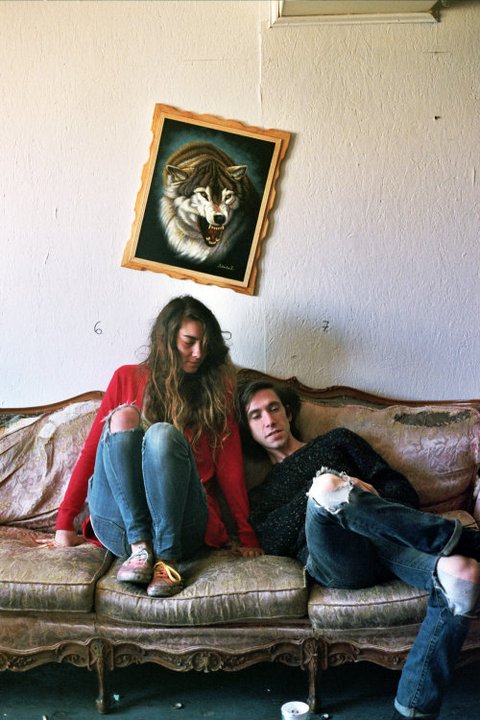
When I call Jeremy Cox of Royal Baths to let us into his Haight apartment, I’m surprised by the youthfulness of the voice that answers. I’ve been listening to Royal Baths for the entire drive up to San Francisco, and young is not a word I would use to describe disquieting songs like “Bad Heart” and “Needle and Thread”.

When Jeremy appears, he’s definitely young - 23 years and 3 days at the time of the interview, to be specific - but he’s dressed like an old photograph: hair parted and slicked back, white shirt buttoned all the way up, black cardigan, and pressed black slacks. His long lashes are darkened with mascara. When I ask him about his attire he says he dresses like this everyday.

Jeremy leads us up a tiny flight of stairs into the house. It’s constructed strangely-there’s a bathroom off a kitchen and windows too high for anyone to see out of, like the Winchester Mystery House or the interiors of a Hitchcock film-San Francisco to the core. We meet singer-guitarist Jigmae Baer in the kitchen where it appears the two have been at work on a 1/4-full economy size bottle of Jim Beam. They’ll polish it off during the interview. Accompanied by the whiskey and a box of cookies, we follow Jeremy and Jigmae up yet another flight of stairs towards what must be Dorian Gray’s attic, or so the gothic atmosphere would suggest.

But no. When we reach the top, it’s the prettiest room I’ve ever seen, a tiny jewel box of a bedroom encased in glass. Sunlight pours in from the surrounding windows and french doors open up onto an unguarded ledge (more like a rooftop, but who can tell in this jumbled up house). The view is what stuns us the most - a panoramic postcard vista of San Francisco, framed by the blue of sea and sky.

“When I moved in here I said that if I ever moved out I would have to leave the city,” says Jeremy. This is exactly what Royal Baths are doing. They’re taking the opportunity to turn next their tour across the United States into a full scale relocation. When Baths get to New York, that’s where they’ll stay. They don’t know who they’re playing with for their “last show” in San Francisco, and don’t seem particularly interested in learning either. It’s clear that, for better or for worse, Baths are done with the city.

Here’s the thing: despite the candy brightness and youth-oriented culture that’s been its calling card since the Gold Rush, San Francisco is a difficult city to survive in, primarily for the young. It’s sinister how so pretty a place can be so harsh at the same time. Baths’ music has heretofore drawn from a darkly lit and brutally honest view of San Francisco, but soon they’ll be working with a new geography, musical history, and identity. New York is a city that, in some ways, is the diametrical opposite of San Francisco. I can’t wait to hear what Baths do with it.
Where did you guys meet?

Jeremy: Jigmae and I met when I was in Arcata, which is where I’m from. We just kept running into each other, and I moved to Portland, Oregon during my senior year. We kept in contact for a few years before I came here and we started playing together.

What do you think is unique to San Francisco that makes it have such a defined sound, for lack of a better word. What about this geography promotes the sound?

Jigmae: For rock and roll, the coasts seem to be focal points for gathering artists. Between Seattle, Portland, San Francisco, and Los Angeles, San Francisco is pretty appealing. It’s hard to live in San Francisco, though. It’s expensive to be a part of a band and even just to live here. That pressure must inform the music. Pressure is a lot more prevalent here than in Portland, where it’s very easy and laid back. L.A. is kind of a little schmoozy from my perspective. San Francisco is the first choice for me on the West Coast. It’s the middleground of not being an asshole but also being serious about your music.

Jeremy: I feel like SF is more of an incubator for music and creativity and when bands go outside they’re appreciated more than when they’re actually in the city. It’s always interesting to see.

What’s the most exciting thing about moving to New York, which has a totally different musical history?

Jigmae: New inspiration and learning new things is really exciting for us. That’s the beauty of it. You can’t foresee how you’re going to be affected by change but it’s an exciting prospect rather than facing stagnation and playing with the same ideas.

Do you think San Francisco needs an all-ages venue, like the Smell in Los Angeles?

Jigmae: Very much so.

Jeremy: The city’s starved for any all-ages venue or any DIY venue. A lot of people have tried to start them, but they’ve been crushed.

Jigmae: Crushed mercilessly. We were excited for our last warehouse show because it was all ages. The cops broke it up after the first band played. It’s just a shame how rigorously they’ll shut down these cool things.

Do you like warehouse shows?

Jigmae: Depends on the warehouse, but those are my favorite if they’re done right. There’s some shitty warehouses, but the good ones…Also, something thing that’s exciting about New York is that our experience with warehouses there is that they’re really well supported.

Why do you like warehouses the best?

Jeremy: I feel like people running the warehouses are very excited to be there, they’re obviously voluntarily there and setting everything up and they’re involved. Whereas at bars people are kind of…they don’t really want to be there and be dealing with bands. That’s not always the case.

Jigmae: There’s some good people, but it can be weird.

So what are your recording plans?

Jigmae: We finished our second record and beyond that we have 7″s that are embarrassingly overdue to turn in so theoretically we’ll be finishing some singles. They’ve been so delayed that it’s hilarious to say we’re going to finish them. I think it’s three of them now that we have to turn in. Beyond that we are actually preparing for a third record. We have at least half a record ready. We’re just raring to go.

Will that be recorded in New York?

Jeremy: Probably. I kind of had fantasies about going to New Orleans and recording during tour. That’s a beautiful town and it has a romantic charm to it.

Are you guys fans of My Bloody Valentine?

Jeremy: I’ve never listened to them.

Jigmae: Yeah. I respect that band and listen to them occasionally, but very infrequently. They are in that vein of that sound, that area of music of bands that we listen to.

Cosmonauts are the ones who recommended Royal Baths to me. Their band seems to be building on the same sort of influences as you, but their music sounds completely different.

Jigmae: For anyone to make anything worth listening to it’s based upon the influences in your life. It comes from yourself so it’d be kind of frightening if our bands sounded the same. Hopefully we’re not clones.
Are you into noise bands at all?

Jeremy: I feel like noise is something that occurs within a project that doesn’t necessarily have to be defined. When it is the definition of the whole project it can become overbearing or obnoxious.

Jigmae: I got into really heavy noise and I’m kind of past that, but it still stays in my head. You’re just a product of different phases in your life. I feel like with the best noise bands, if you strip it down, you can still find some folk structure in it.

Are your songs basic in that sense as well?

Jigmae: The root of them, the essence of them, are folks songs, blues songs.

How do you write your songs?

Jeremy: Jigmae and I will come up here and I’ll have an acoustic guitar and Jigmae writes all the lyrics. So he has a typewriter and I have a guitar. It’s nice to not be attacked by iPhones and computers where you’re trying to write a song. Silence is a huge part of our songwriting.

Jigmae: It’s nice to just see the words on the paper in a nice font as you go.

What kind of equipment do you guys use?

Jigmae: Marshall stacks, the bigger the better.

Jeremy: We use the same guitar amps for recording. I like to explore to get sounds on a record, not have each song sound exactly the same. So for our sound we change guitar amps a lot and also for our sound we sing through guitar amps just because I like the sound.

Jigmae: It’s also a question of poverty and what’s available to you.

Jeremy: On our first record we used one microphone for every track except for the drums. It was just out of necessity. We did it track by track.

Jigmae: Jeremy’s really into building guitars, he always seems to always have a new Frankenstein guitar.

Jeremy: I love taking things apart.

That’s really cool that you build your own guitars.

Jeremy: My uncle helps me. I’ll go to his house, which is up north a couple hours, and he’ll help me put together a guitar. It’s always nice to build your own.

What’s your favorite guitar you’ve built?

Jeremy: Embarrassingly enough I like the Wayne’s World reissue guitar from the 90s. I like how that one feels. I put new pick ups in it, and that’s my favorite. Some of the cheap guitars feel a lot better than the more expensive ones. With equipment, I don’t like to focus on aesthetics. I like a guitar that I can trash around.

On “Litanies” you used a lot of different instruments like the xylophone. Are you going to be using them again on your new record?

Jeremy: I don’t know if the xylophone will be finding it’s way back. I took cello lessons for three or four months. I’m not really too fond of keyboards. We’ll probably try to incorporate more string instruments. Sometimes the electric guitar gets kind of tiring.

Your band recently released singles on a European label. There seems to be a historical kinship between London and San Francisco and a lot of residents really appreciate our music more than local residents do.

Jigmae: There’s a strong history of rock and roll in England some of Europe and, just from what I’ve seen, their generation is not really pursuing making that music. It’s more been electronic based. So I’m sure they’re hungry for it, they’re just begging for it.

Are you not into electronic music?

Jigmae: There’s the occasional band that strikes me.

Jeremy: It has a place. I would hate to say I don’t like an entire type of music. It’s always frustrating when people say that because it’s really band by band.

Jigmae: We listen to Suicide and Kraftwerk.

But just because you play synths doesn’t mean you sound like Kraftwerk.

Jigmae: I try to stay away from negativity.

Jeremy: A lot of synth music tends to be super power poppy and that kind of stuff just bugs me, but, then, guitars do too.

When people talk about your band and how you fit into the San Francisco scene, they always say that you made the music that you guys wanted to hear, that you thought was lacking in the area. Do you feel like your music is “dirgey” and “funereal” and other words that reviewers have used to describe you?

Jigmae: We have mottos of the month and we come up with a new one every so often. The latest one was, “The Baths are here, the party’s over.” We’re not making something to our ears is ugly, we’re making what to our ears is beautiful. It’s how you perceive beauty and maybe our perception of beauty is different. We just try and be honest. We don’t try to dwell. It’s just an honest reflection of our lives and the lives of our friends around us. If that comes out as sad then…We’re just trying to look at things as they are, clearly, and not trying to skirt around things and create a false persona.

Jeremy: I also think our music isn’t necessarily dismal or sad, there’s a lot of comedy in it.

Jigmae: It’s satirizing the sadness sometimes.

Jeremy: A lot of it’s satirical and I think people’s perception of bands are different. What you were saying about Cosmonauts citing the same influences as us, they probably perceive the music differently than we do. That’s important to recognize. So there.

Was your music a reaction to the music that was being played around here, like one-too-many boring 3-chord punk bands?

Jigmae: I don’t have a problem with 3 chords.

Jeremy: We usually don’t change chords at all. We can’t really knock that.

Jigmae: If you pay attention, not to sound overbearing, but if you listen to a lot of the bands we admire and that other people might admire, they complained also during their time. There was no renaissance. Maybe there was a renaissance, but many bands are in a vast forest of shitty bands and shitty generic ideas. That might instigate it, but it’s more about trying to create something. What are we here for anyways? We’re idealists. There’s no nihilism here.
interview: Nick Waterhouse

Nick Waterhouse isn’t trying to duplicate your grandfather’s old R&B records any more than shoegazers today are cloning the riffs on your aunt’s Jesus and Mary Chain records. Waterhouse’s aggressively up-beat, soulful arrangements are grounded in the same fertile Southern California good vibes feel that infuses the music of other popular pop artists living in the Bay, including friends Ty Segall and Mikal Cronin. We caught up with Nick Waterhouse to talk about the new LP, eBay and pressing plants before he and his Tarots join the Allah-Las for a headlining show at Slim’s in San Francisco Wednesday night (ed: tonight!).

mp3:
Nick Waterhouse // “Is That Clear”

Tell us more about the new LP. Where did you record?
.
It was recorded at McHugh’s Distillery in Costa Mesa, California.

The album was one of the wildest things I’ve done in my life. It was recorded in a bunch of trips down to Southern California, often in these manic 48-72 hour periods which were bookended by 8 hour drives and scheduled around shows with the Tarots. So it was like: Drive, Show, Sleep, Record, Show, Sleep, Record, Drive. There were times of total peak intensity and times of exhaustion, just crazy, rabbit-hole moments in this studio with no windows and you don’t know if it’s night or day. I discovered how difficult it is to get a large ensemble to all be ‘on’ for certain takes, especially when someone is tired. And because I cut as live as possible with everyone in the same room, it could get pretty intense. I can say that I really stand behind it for everything, though — it’s a record, which is supposed to be a record of a place and time. The Naturelles, The Tarots are all over it, and I’ve got Ty Segall on drums on two tracks, some members of the Allah-Las, and of course, Ira Raibon of The Fabulous Souls playing sax on a few tunes. It’s going to be out in March or April of 2012.

How did you and Ty connect?

Ty and I have known each other since we were growing up in Orange County together. Him and some of the Moonhearts and Trad Fools guys used to come see this band I was in at the time, and after I left for San Francisco his musical career really began with the Epsilons. When he came to San Francisco we played music together a few times. I just phoned him up and asked if he was available that particular weekend, knowing full well that he was a viciously talented drummer.

Your music is a refreshing counterpoint to a lot of what’s played in the Bay Area now. Do you think of yourself as a “local artist” or do you happen to just live here?

I feel like an anomaly, though I do feel right at home with DJs more than other bands. I have never really been at home anywhere, but San Francisco.. it has been where I managed to get the Tarots together. I don’t know what that means in the grand scheme. I never fit in anywhere, but also fit in just fine.

Not many people know that you operate your own (very successful) record label. What has been your biggest challenge so far?
.
Yeah, Pres. Besides learning everything by trial and error - it was probably when the hand letterpressed labels for the Allah-Las ‘Catamaran’ single were burned accidentally by the pressing plant, who had to bake them. It delayed the pressing by about two months to have them restamped and printed, then baked again and pressed. The price of doing things in a particular way. I don’t care. That single is so good.

Speaking of records, auctions of your 45 have commanded some hefty price tags on eBay. We keep one at the house in case we can’t make rent one month.
.
I am really flattered to be auctioned off like a rare RnB tune by the same people I have watched on there, and the same people I know are major DJs. It’s surreal. I would love to see it get played at the nights some of these DJs run in Europe. The record is definitely made for dancers, so it’s profoundly satisfying to see guys I would want to DJ with going ape over trying to get a copy.
.
It’s funny because I don’t know if my acquaintances and friends from San Francisco realize I can identify their ebay accounts. There are some whom I gave freebies to that have probably made more profit than I have on ‘Some Place’ at this point.

What does the future hold? Any news on an overseas tour?
.
I’ll be producing the Allah-Las forthcoming debut LP, as well as a single for the Naturelles out on Pres. There’s a tour in the works up the coast in December, and then some European dates I’m working on for March. After that, a lot of US dates to support the album, which will be out in April.

-

Nick Waterhouse & The Tarots headline tonight at Slim’s supported by Sparrows Gate and label-mates the Allah-Las. Tickets, purchased here, are 9 in advance and 11 at the door - show starts at 8:30. Waterhouse’s self-produced 45rpm “Some Place” has been sold out for awhile now, so if you want a chance at grabbing that you’ll have to try eBay. Watch the black/white vid for the song “I Can Only Give You Everything“ below:

What’s going on this week?

Personal and the Pizzas // “Toss That Pie”

Tuesday
Baby Talk, Lenz, Tambo Rays @ Hotal Utah, 8pm

Wednesday
Nick Waterhouse & The Tarots, Allah-Las @
Slim’s, 9pm
Bare Wires, BuzzMutt, Moonbell @ The Knockout, 9pm
Violet Hour, Myonics, The Symbolick Jews, Arms N Legs @ Bottom of the Hill, 9pm

Thursday
Hank IV, Dead Farmers, Outdoorsmen, Swiftumz, Lenz @
Thee Parkside, 9pm

Friday
Beehavers, Magic Leaves, Arborea @
Amnesia, 9pm
The Rip Offs, Nobunny, Statics, Personal and the Pizzas, Shrouds @
Bottom of the Hill, 8:30pm

Saturday
Kids on a Crime Spree, Sourpatch, Bam! Bam! Palms Springs @
Vitus, 8pm
Tronics Cover Band (Mike Donovan, Will Ivy, Nathan Grice, Chrys Nodal) @
Engine Works, 8pm $5

Sunday
Sonny and the Sunsets, Fuckeroos @
Make-Out Room, 9pm
Ocelot, Wild Moth, Only an Island, Tender Buttons @
Sub-mission Gallery, 7pm
Phantom Surfers, Legendary Stardust Cowboy, Lateenos, Harold Ray, Midnight Snaxxx, Okmoniks, The Mothballs, Special Ed, Red Barons, City Deluxe @ Thee Parkside, 1pm

-

Anything else?